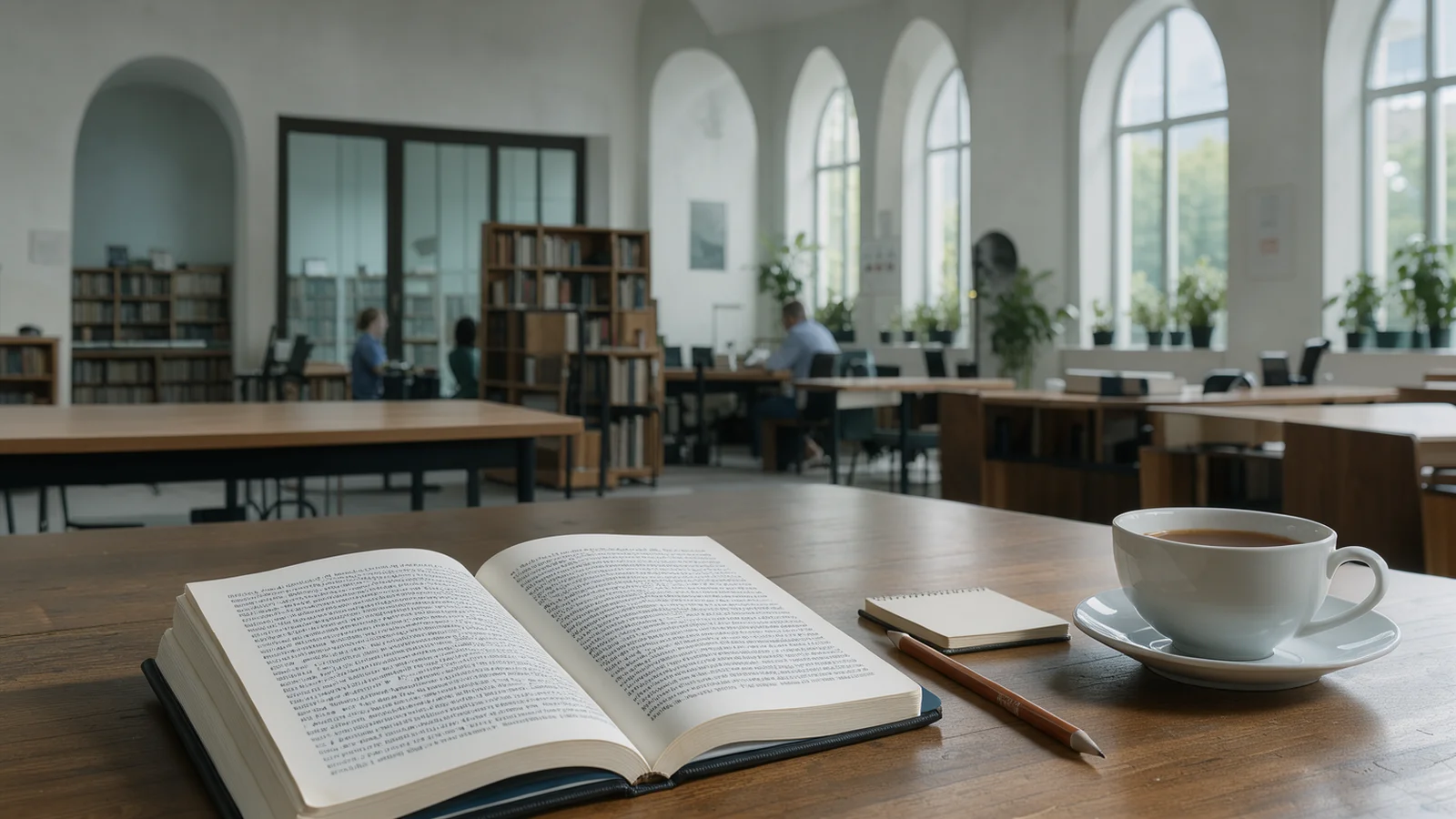
How to read the Bible
The Bible isn't one book read front to back like a novel. It's a library of 66 books in most Protestant Bibles, written over many centuries, with history, poetry, letters and prophecy side by side. That's why the best start for most people is one of the Gospels, the four accounts of Jesus' life. Mark is short and fast, and John explains why it was written. Read one chapter a day in a modern translation you understand. Before you begin, ask God to open your eyes. After you finish, write one sentence about what you noticed and one thing you'll do about it. A short daily reading does more than a long one now and then.
Where to start reading the Bible
There is no single right place to start, but some starts are much easier than others.
Start with a Gospel
Mark is the shortest Gospel. Its 16 chapters read like a story told in a hurry. John is slower and more reflective. It also tells you its own purpose near the end.
But these are written so that you may believe that Jesus is the Christ, the Son of God, and that by believing you may have life in His name.
John 20:31 BSB
Jesus is the center of the whole Bible. On the road to Emmaus he took two discouraged followers through the Old Testament and showed them what it said about him (Luke 24:27). Knowing him first makes the rest easier to follow.
Then go back to Genesis
Once you've read a Gospel, Genesis gives you the beginning of the story: creation in six days and the Sabbath rest on the seventh, then the fall, the flood and God's promise to Abraham. Exodus follows naturally. Many readers slow down in Leviticus. That's normal. Skim the parts you don't yet understand and keep going.
Keep the Psalms and Proverbs alongside
Add one psalm, or a few verses of Proverbs, to your daily chapter. The Psalms teach you to pray, and Proverbs is full of short sayings about work, money, speech and friendship.
A simple method for each chapter
You don't need a study course to read well. These six steps fit into fifteen or twenty minutes.
1. Pray before you open it
Ask God to help you see what's really there. The psalmist prayed exactly that.
Open my eyes that I may see wondrous things from Your law.
Ps 119:18 BSB
2. Read the whole chapter slowly
Read it straight through once without stopping. If something confuses you, mark it and keep going. Reading aloud helps if your mind wanders.
3. Ask what it says
Before asking what a passage means for you, notice what it says. A few questions help:
- Who is speaking, and to whom?
- What happens, or what is being taught?
- What does it show about God?
- Is there a promise, a warning or a command?
Write down the answers in a line or two.
4. Read it in its setting
A verse belongs to a chapter, and the chapter to a book with its own audience and purpose. Paul's letters were written to real churches with real problems, and the Psalms were sung. A good study Bible or a short book introduction will tell you who wrote it and why.
5. Choose one thing to do
James warns against hearing without doing.
Be doers of the word, and not hearers only. Otherwise, you are deceiving yourselves.
Jas 1:22 BSB
One small, concrete step is enough: a call you'll make, a habit you'll drop, a sentence you'll pray during the day.
6. Come back tomorrow
The step that matters most is tomorrow's chapter. Reading regularly matters more than reading a lot.
Which translation to read
Pick a translation you understand without effort. Modern translations such as the NIV, CSB, ESV and NLT are all reliable and readable, and the NLT is the easiest of these for most beginners. The King James Version is beautiful, but its 400-year-old English can make a first reading harder than it needs to be. If you speak another language at home, read in the language you think in.
How much to read each day
Start with one chapter. Most take five minutes or less to read, which leaves time to think and pray. If you want to read the whole Bible in a year, three or four chapters a day will get you there, and a printed reading plan helps you keep track.
Pick a fixed time and place. For many people that's the morning, before the phone comes out. Joshua was told to keep the law on his lips and think about it day and night.
This Book of the Law must not depart from your mouth; meditate on it day and night, so that you may be careful to do everything written in it. For then you will prosper and succeed in all you do.
Josh 1:8 BSB
If you miss a day, don't try to catch up with five chapters at once. Just read today's chapter.
When the Bible is hard to understand
Everyone meets passages they don't understand. The Ethiopian official in Acts was reading Isaiah in his chariot when Philip ran up to him.
So Philip ran up and heard the man reading Isaiah the prophet. “Do you understand what you are reading?” Philip asked. “How can I,” he said, “unless someone guides me?” And he invited Philip to come up and sit with him.
Acts 8:30–31 BSB
Asking for help is part of reading. Read with a friend or a small group, use the notes in a study Bible, and let clearer passages explain harder ones. The Bereans in Acts 17:11 checked what they heard against Scripture every day, and that habit still works.
Why read the Bible at all
Paul told Timothy that every part of Scripture has a purpose.
All Scripture is God-breathed and is useful for instruction, for conviction, for correction, and for training in righteousness, so that the man of God may be complete, fully equipped for every good work.
2 Tim 3:16–17 BSB
The Bible doesn't promise that every chapter will feel exciting. It does promise light for the next step, and one chapter a day is how most people find it.
Your word is a lamp to my feet and a light to my path.
Ps 119:105 BSB