What the Bible says about cremation
The Bible doesn't give a command about cremation either way. No verse says Christians must bury their dead, and none says burning a body is a sin. What Scripture does show is a clear custom. From Abraham burying Sarah to Joseph of Arimathea laying Jesus in a tomb, God's people buried their dead. The few times the Bible mentions burning a body, it's usually a punishment or an emergency. Scripture also explains what death is. It calls it a sleep that lasts until the resurrection at Christ's return. The God who formed the first man from dust can raise the dead from whatever is left. So the choice between burial and cremation belongs to conscience and custom.
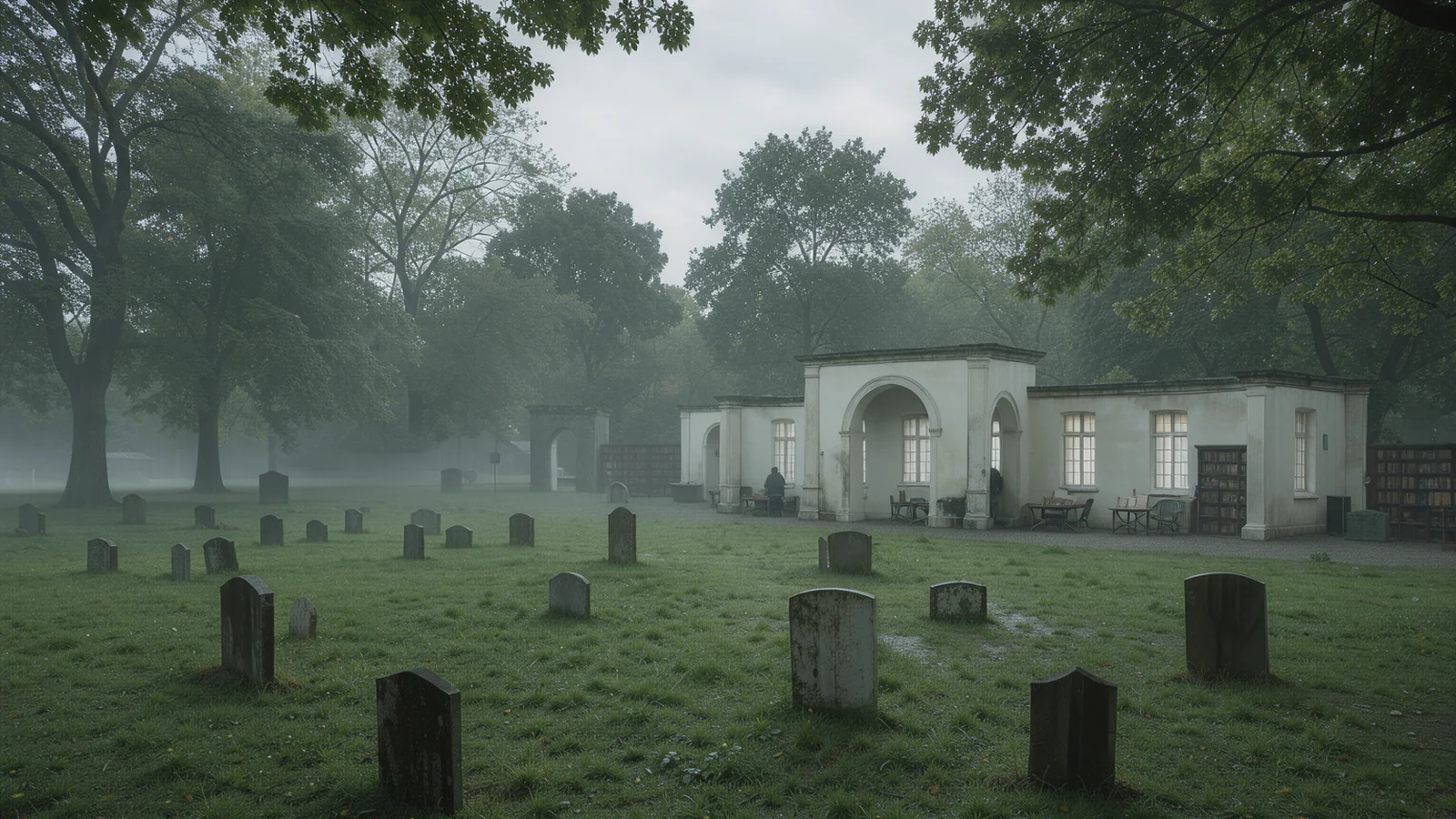
Burial was the custom of God's people
The first burial the Bible describes in detail is Sarah's. When she died, Abraham paid full price for a field with a cave so his family would have a place to rest.
After this, Abraham buried his wife Sarah in the cave of the field at Machpelah near Mamre (that is, Hebron) in the land of Canaan.
Gen 23:19 BSB
Later Abraham himself was laid in the same cave, and so were Isaac and Jacob after him. Joseph asked that his bones be carried out of Egypt when Israel left, and Moses kept that promise centuries later (Exodus 13:19). Kings were "buried with their fathers," and even Moses was buried by God himself in a valley in Moab (Deuteronomy 34:6).
The New Testament continues the pattern. Jesus' body was wrapped in linen and placed in a rock tomb. Stephen, the first Christian martyr, was buried by devout men who mourned him (Acts 8:2).
The early Christians kept burying their dead while the Roman world around them often cremated. They called their burial grounds by a Greek word meaning sleeping place, which is where the English word cemetery comes from.
When the Bible mentions burning a body
Burning appears only a handful of times, and the setting matters.
As a punishment
After Achan stole from the spoils of Jericho, he was stoned and then burned (Joshua 7:25). The law of Moses also prescribed burning for a few grave sins (Leviticus 20:14, 21:9). In these cases the fire belonged to the judgment.
The prophet Amos records God's anger at Moab for an act of contempt toward a dead enemy.
This is what the LORD says: “For three transgressions of Moab, even four, I will not revoke My judgment, because he burned to lime the bones of Edom’s king.
Amos 2:1 BSB
Moab's sin was the cruelty of desecrating a king's remains. The verse doesn't speak about families who choose cremation with respect.
In an emergency
The clearest case of burning a body with honor is King Saul's. The Philistines had hung the bodies of Saul and his sons on a city wall. Brave men from Jabesh-gilead rescued them.
all their men of valor set out, journeyed all night, and retrieved the bodies of Saul and his sons from the wall of Beth-shan. When they arrived at Jabesh, they burned the bodies there. Then they took their bones and buried them under the tamarisk tree in Jabesh, and they fasted seven days.
1 Sam 31:12–13 BSB
The Bible doesn't criticize them. They burned the bodies and buried what remained, and David later blessed them for their kindness (2 Samuel 2:5).
What the Bible says happens at death
Behind the question about cremation there's often a deeper one: what happens to the person? Scripture answers more plainly than many expect.
The body came from the ground and goes back to it. God told Adam so after the fall.
By the sweat of your brow you will eat your bread, until you return to the ground—because out of it were you taken. For dust you are, and to dust you shall return.”
Gen 3:19 BSB
Burial and cremation reach the same end by different roads. One takes years and the other takes hours.
The Bible also describes the dead as resting, unaware of what happens under the sun.
For the living know that they will die, but the dead know nothing. They have no further reward, because the memory of them is forgotten.
Eccl 9:5 BSB
Jesus used the same picture when his friend Lazarus died. He called death sleep, and then he went to wake him.
After He had said this, He told them, “Our friend Lazarus has fallen asleep, but I am going there to wake him up.” His disciples replied, “Lord, if he is sleeping, he will get better.” They thought that Jesus was talking about actual sleep, but He was speaking about the death of Lazarus.
John 11:11–13 BSB
Resurrection doesn't depend on the body's condition
Christian hope rests on the resurrection. Paul describes the moment it happens.
For the Lord Himself will descend from heaven with a loud command, with the voice of an archangel, and with the trumpet of God, and the dead in Christ will be the first to rise. After that, we who are alive and remain will be caught up together with them in the clouds to meet the Lord in the air. And so we will always be with the Lord.
1 Thess 4:16–17 BSB
The dead in Christ rise together when he returns, in plain sight of everyone. Nobody is raised because of how well their body was preserved. Martyrs burned at the stake and believers whose graves crumbled a thousand years ago wait for the same voice.
Paul also says the raised body is a new one, given by God.
So will it be with the resurrection of the dead: What is sown is perishable; it is raised imperishable. It is sown in dishonor; it is raised in glory. It is sown in weakness; it is raised in power. It is sown a natural body; it is raised a spiritual body. If there is a natural body, there is also a spiritual body.
1 Cor 15:42–44 BSB
A God who made Adam out of the ground can raise people from ashes as easily as from dust. The psalmist found comfort in the fact that God remembers what we are made of.
For He knows our frame; He is mindful that we are dust.
Ps 103:14 BSB
How different Christian traditions see cremation
The Catholic Church still prefers burial, but it has allowed cremation since 1963, provided it isn't chosen to deny faith in the resurrection. Since 2016 it has asked that the ashes rest in a cemetery or another sacred place, and that they be neither scattered nor kept at home. Eastern Orthodox churches consider burial the norm and accept cremation, if at all, only when burial isn't possible. Most Protestant churches leave the decision to families. Many of them still see burial as the fuller picture of the hope of resurrection. Traditional Jewish law requires burial.
Where Scripture gives no command, Christians are free to decide with a clear conscience. Paul's advice about disputed matters applies here: believers shouldn't judge one another over them (Romans 14:1), and each should act with a clear conscience before God (Romans 14:22).
Questions to talk through as a family
If you're planning for yourself or for someone you love, a few honest questions can help:
- What does the person want, and has it been said out loud?
- Is anyone in the family troubled in conscience by one option?
- Would a place to visit matter to the children?
- Can the cost of a funeral become a burden on the people left behind?
Whatever you choose, the Bible's comfort is the same. Paul wrote about believers who had died so that the living wouldn't grieve like people without hope (1 Thessalonians 4:13). The dead are asleep, and the God who wakes them doesn't need anything from us to do it.
And many who sleep in the dust of the earth will awake, some to everlasting life, but others to shame and everlasting contempt.
Dan 12:2 BSB